About a year into working from my spare bedroom, I started doing what a lot of people do around 3 p.m.: I would lean sideways against the back of my old chair to give my lower back a break. That chair came with the house, and it had no lumbar support at all. By the time I finished a manual on industrial valves, my back was in a knot. When a friend suggested a kneeling chair, I almost bought one on the spot. I am glad I did not. She let me borrow hers, and that loan stretched into three months of side-by-side testing. This is the comparison I wish I had before I went down the ergonomics rabbit hole.
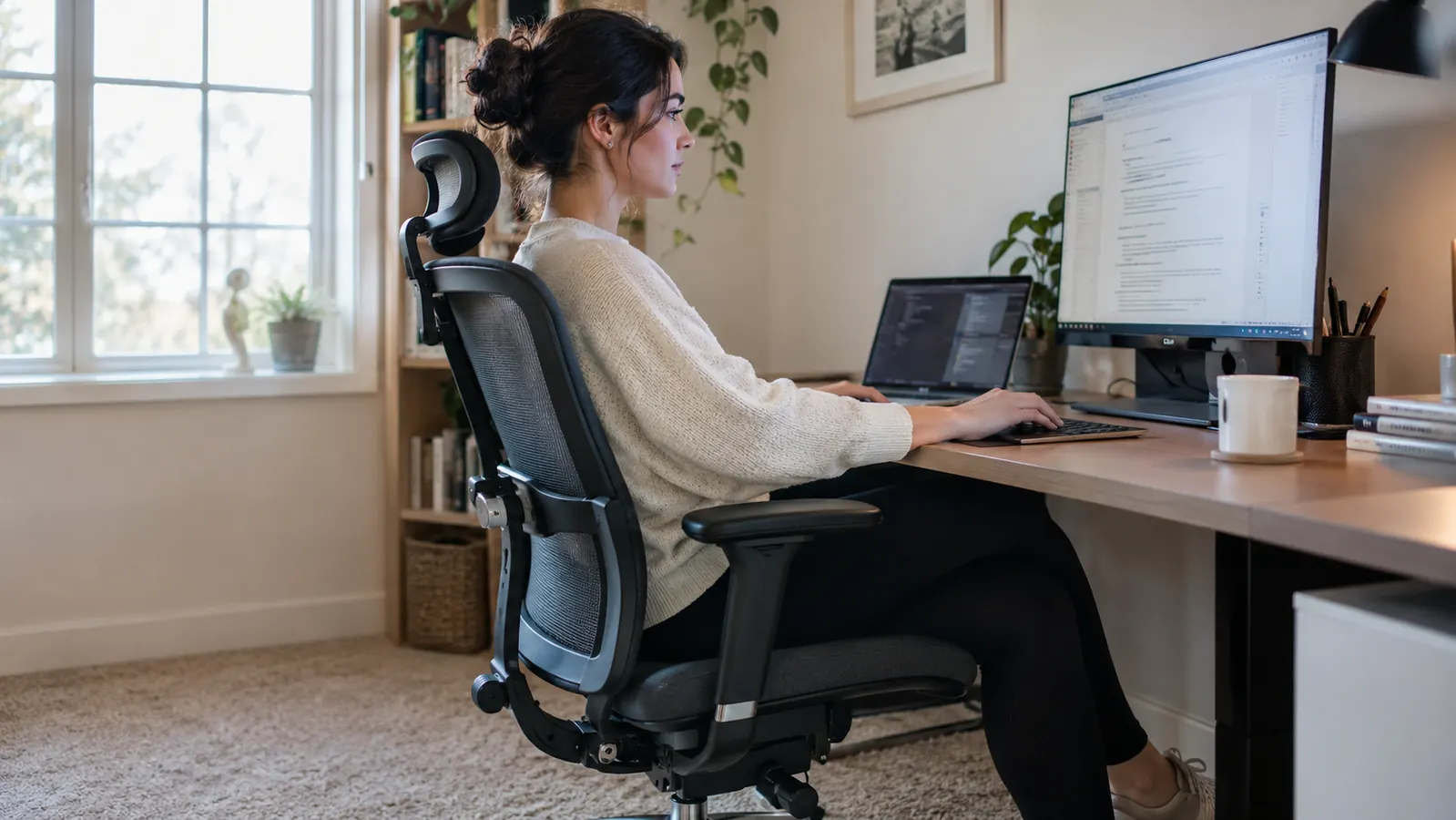
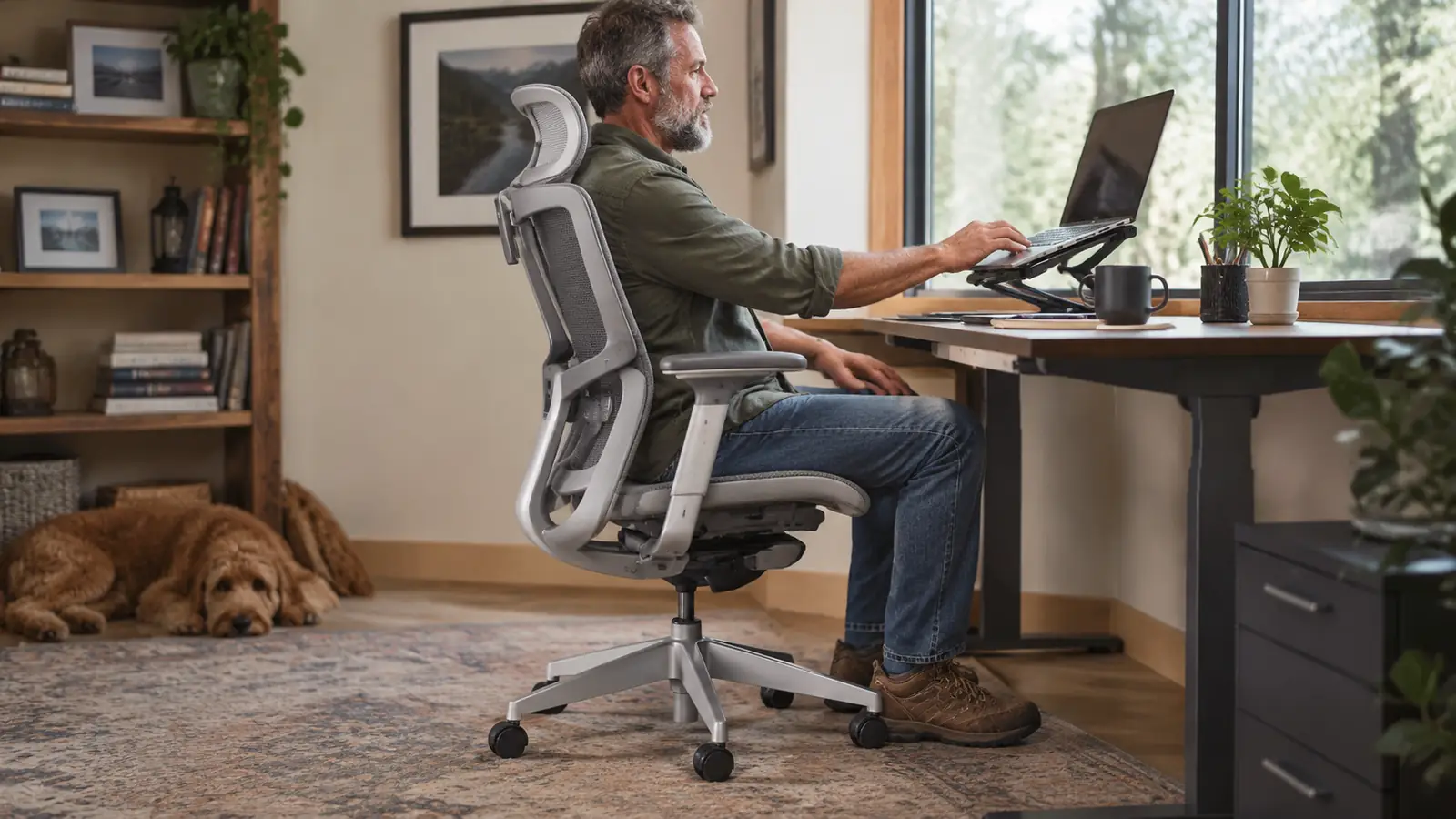
Let me be clear what I mean by the two chairs. A kneeling chair is a low stool with a sloping seat and a padded rest for your shins. It tilts your hips forward so your spine keeps its natural curve without a backrest. The other is the GABRYLLY ergonomic office chair: high mesh back, headrest, flip-up arms, tilt lock and a wide cushion. I used both at my own desk in a 10 by 11 foot room with one north-facing window. The GABRYLLY is my primary chair now. The kneeling chair did some things better than I expected, and some things much worse. Neither one is a cure. I am writing this as someone with a lower-back complaint from a 2015 car accident, not as a physical therapist.
My first attempt at fixing the problem was a rolled-up towel behind my lower back. It helped for about a week and then slid down between the seat and the backrest. I tried moving my monitor closer and taking short standing breaks. Each fix dealt with one symptom and let another appear. I suspected I could never tolerate a kneeling chair for a full day, and I wanted to prove that to myself before I spent money on a proper chair. That turned out to be the right order, though the proof ran in the opposite direction from what I expected.
I compared them the way I compare anything I have to live with. I put each chair in the same spot under the desk, used my real keyboard, and kept a running note on how I felt at the end of every week. The kneeling stool went first. Then the GABRYLLY took its turn in that same spot for two more weeks. I did not measure angles or take photos for social media. I tracked whether I reached for the heat pad after a deadline, whether I kept shifting my weight from one hip to the other, and whether I could stand up straight when I finally closed my laptop.
| GABRYLLY Ergonomic Chair | Kneeling Chair | |
|---|---|---|
| Spinal support | Tall mesh backrest with a built-in lumbar curve, a headrest, and a recline that supports the lower back. | No backrest at all. Your core muscles have to hold you upright. |
| Full workday comfort | I sat through six-hour writing days and changed positions without leaving the seat. | I needed a break after about 45 minutes because my shins and knees complained. |
| Floor space | Normal five-wheel office chair base with standard clearance behind the desk. | Narrow stool that I could slide almost completely under the desk. |
| Active posture | Easy to sit well in it, but also easy to slouch when you get tired. | The forward slope keeps your hips open and makes it hard to fold into a C shape. |
| Video calls and neck support | Headrest catches your neck and the high back gives you somewhere to lean during breaks. | The forward tilt made my neck work harder when I looked at a monitor for a long time. |
| Best for | Full-time desk work, people with back and neck complaints, long writing sessions. | Short focused sprints, a posture reset for a person who already owns a good chair. |
What convinced me was not the backrest. It was being able to lean back in the middle of a paragraph and feel my lower back unload.
Where the GABRYLLY Chair Wins
I will start with the reason it became my only office chair. The tall mesh back and the tilt lock let me change position without leaving my seat. On a kneeling chair, you stay locked in one angle. I type in long blocks, and around hour two I need to recline for a minute to let my lower back unload. The GABRYLLY lets me find an upright working angle or a slightly relaxed one, and the headrest catches my neck when I lean back. I noticed it first on a Thursday when I had back-to-back calls and then two more hours of editing. My neck and shoulders usually ached by the end of that kind of day. That Thursday they did not.
The rest of the chair is quietly comfortable. The mesh lets air move, so I do not get the sticky feeling I had with my older padded chair. The seat is wide enough for a full-size adult, and the flip-up arms let me roll close to the keyboard without the armrests hitting my desk apron. I am five-foot-four, and the seat lowers enough that my feet rest flat on the beige carpet. That sounds simple. It mattered to my lower back more than any other adjustment. On the bad days when my 2015 car accident acts up, I drop the seat another notch and use the recline to find an angle that works. Because no one else uses the chair, the settings stay where I put them.
I also tested the chair on a bad Monday in March. My back was stiff, and I thought about taking the day off. Instead I sat in the GABRYLLY, lowered the seat a half inch, and set the back to its most open angle. Two hours of writing went by comfortably enough that I forgot the heat pad I had plugged in across the room. That is one day, not a medical endorsement. I am not a physical therapist, and your back may behave differently. But it told me the chair was doing the main job I needed it to do.
Assembly took about twenty minutes with the included Allen key. The holes lined up, and I did not have to force a single screw. That sounds like a small thing, but I have built enough flat-pack furniture to know it is not. Four months later the pneumatic lift still holds the seat where I set it, and the casters roll quietly on the beige carpet. I have not tightened a bolt since. The only change I made after the first week was raising the headrest by about an inch so it sat behind my neck instead of my shoulders.
Where the Kneeling Chair Wins
I want to be fair, because the kneeling chair has a real job. The open hip angle changes where your weight sits. On the kneeling stool, my chest felt open and I did not have the usual urge to cross one leg under the desk. For the first twenty minutes of a writing sprint, my posture was better than it has been on most normal chairs I have tried. The stool also takes less floor space. It was easy to slide it out of the way when I needed to stand and stretch. Nothing about it blocked the baseboard heat or the window light.
It also wins in a less obvious way. Because the kneeling chair is less comfortable, it makes you get up. There is no high back to sink into, so after an hour your shins and knees tell you to stand. For a person whose problem is sitting too long without breaks, that nudge is worth something. And it is a reasonable choice for a temporary desk where you do not want to haul a heavy chair. If my back complaint were mild, or if my workday were mostly short blocks, I think a kneeling chair alone could be enough. That is not my workday. I once spent most of an afternoon on hold with a client while sitting on the kneeler, and long before the call ended I was sitting cross-legged on the floor next to it.
The kneeling chair also shines for paperwork. Several times during the test period, I pulled it over to the window and used the low, sloping seat to read a printed spec with the pages in my lap. The forward tilt let me look down without bending my neck into a question mark. That is the same position that helps on video calls for some people, but it is where the kneeler felt most useful to me. When I gave it back to my friend, she said she uses hers for the same thing: forty-minute morning sessions while her coffee is hot, then she stands. That is the pattern that makes a kneeling chair worth owning, but only if it is not your only seat.
The biggest strike against the kneeling chair, for me, was the pressure on the fronts of my shins. I used a padded model, and I still had to shift off the pads every twenty minutes or so. My knees were fine, but the constant pressure kept me from settling into deep work. I also realized how much I rely on a headrest when I stop typing to think. On the kneeler there was nothing behind my head, so I found myself bobbing forward. That is a fine trade for someone doing twenty-minute email sessions. It is a poor trade for someone whose job involves long stretches of writing.
For six-hour days, the GABRYLLY is the chair that stayed in my office
The kneeling chair is a good second seat, but it could not carry me through a full day of writing. The GABRYLLY did. Check the current price on Amazon and see whether it fits your desk the way it fit mine.
Amazon Check Today's Price on Amazon →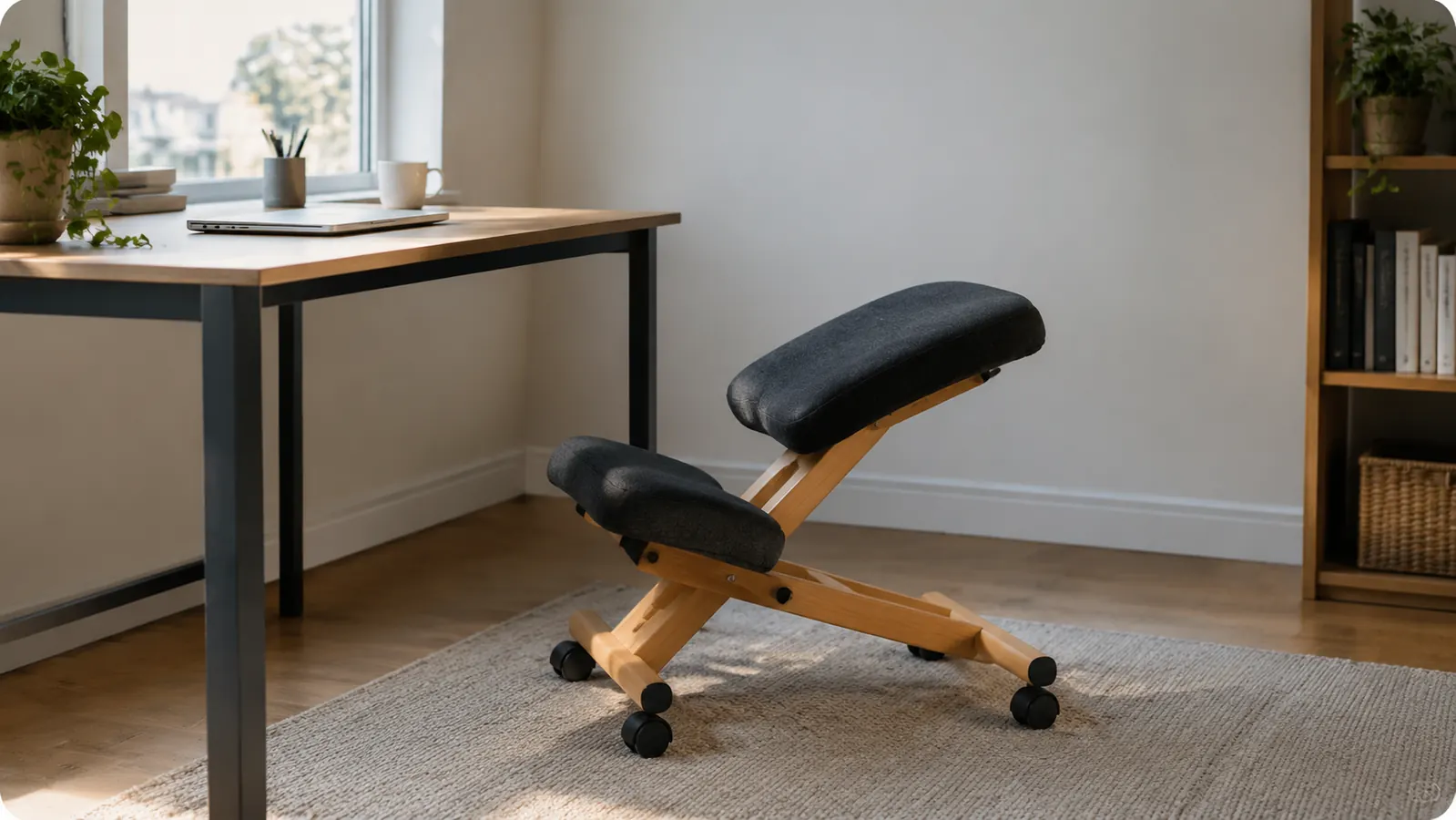
Who Should Buy Which
Buy the GABRYLLY if you spend most of the day in one seat, take video calls, have a sore neck or lower back, and want a chair you can set once and stop thinking about. Buy a kneeling chair if you already have a good primary chair and want to rotate it in for short stretches, or if floor space is tight and you are willing to trade a backrest for a more open hip angle. There is also a size consideration. I am five-foot-four, and the GABRYLLY seat adjusts low enough for me. A taller person would want to check the seat height before ordering.
For me, the decision came down to one question. Could the kneeling chair replace my only office chair and still get me through a two-thousand-word deadline? No. By hour three I was shifting on the stool and missing a backrest. The GABRYLLY could. It is the first chair since my accident that I do not think about while I am writing. When you stop noticing your chair, that is the sign it is working.
I also tested my preference by working one full week on the kneeling chair and one full week on the GABRYLLY, in that order. The kneeling chair week ended with me adding an extra stretch break every afternoon. The GABRYLLY week ended with no change to my routine. That is not a lab test, but it is honest. The right chair depends on how long your longest sitting stretch really is, not on how long you wish it were.
If you are still undecided, try to sit in a kneeling chair before you buy one. A friend may own one, or an office supply store may let you test the display for five minutes. The shin pressure and the open hip angle will tell you quickly whether that trade is worth it. The GABRYLLY, by comparison, is the safer bet for anyone who needs to sit for long blocks, because it behaves like a familiar office chair with more support. I would rather recommend something most people can use for six hours than a posture device that only works for a subset. Your back deserves that kind of caution.
It comes down to your longest sitting stretch
If that stretch is more than two hours, buy the chair with a backrest. I bought the GABRYLLY after three months of testing and I have not second-guessed it. See the latest price on Amazon and read the reviews before you decide.
Amazon See Today's Price on Amazon →