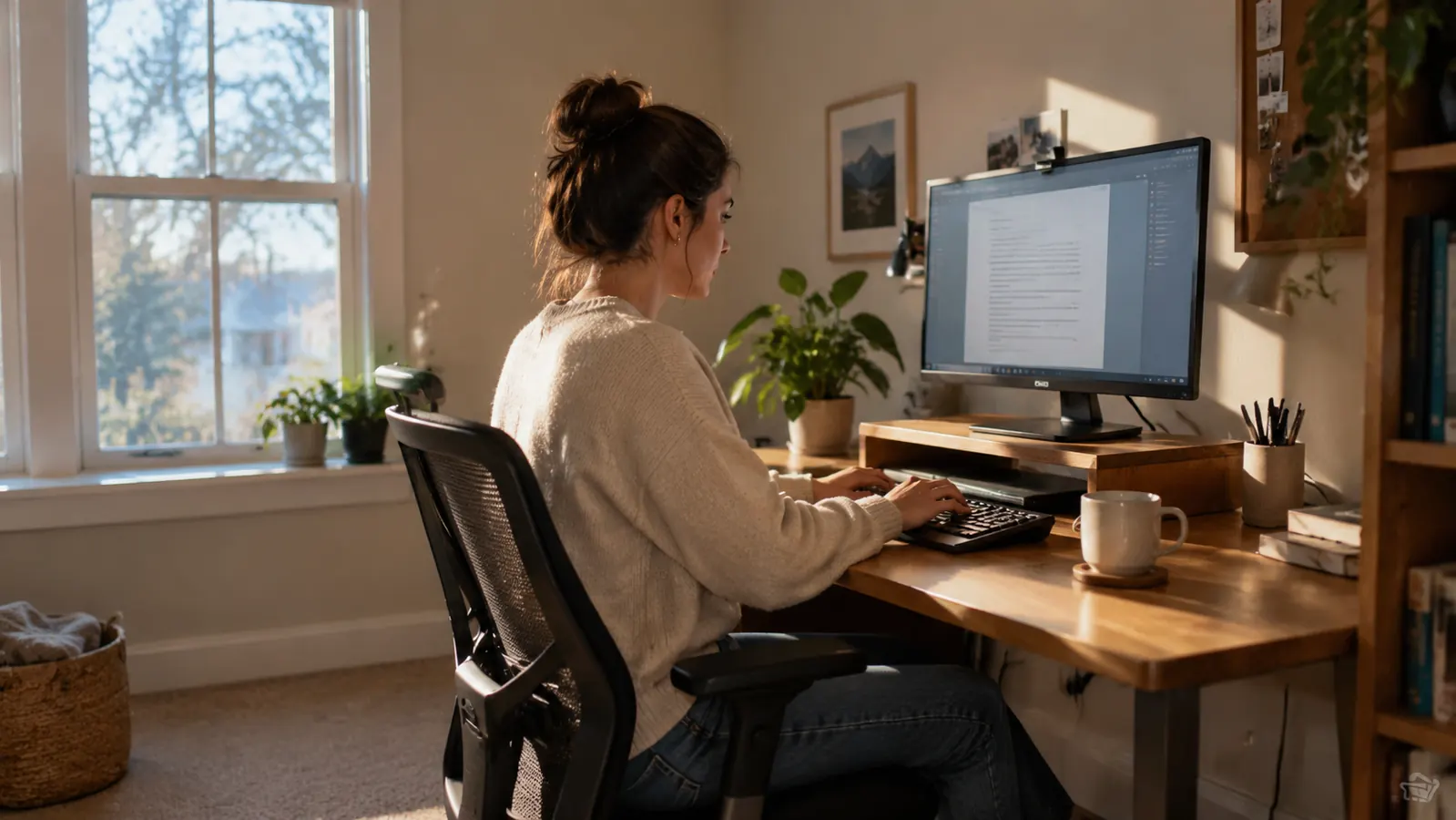
The pattern started long before I blamed my desk. By two in the afternoon I would read the same paragraph three times, make a fresh pot of coffee, and then stare out the window while the coffee cooled. I am a freelance technical writer, so my work is mostly sitting and thinking at one desk in a room that has been my office since 2019. Beige carpet, one window, one chair that had slowly become more of a problem than I wanted to admit.
Full standing desks seemed like the obvious fix, but I had no desire to get rid of the desk I already owned. It is a plain, sturdy thing that fits the room, and taking the whole setup apart never felt worth a weekend. What finally made sense was a smaller piece of furniture from VIVO: a 36 inch standing desk converter that sits right on top of the existing surface. It promised standing sessions without a second desk, and after a week of comparing models, I ordered one.
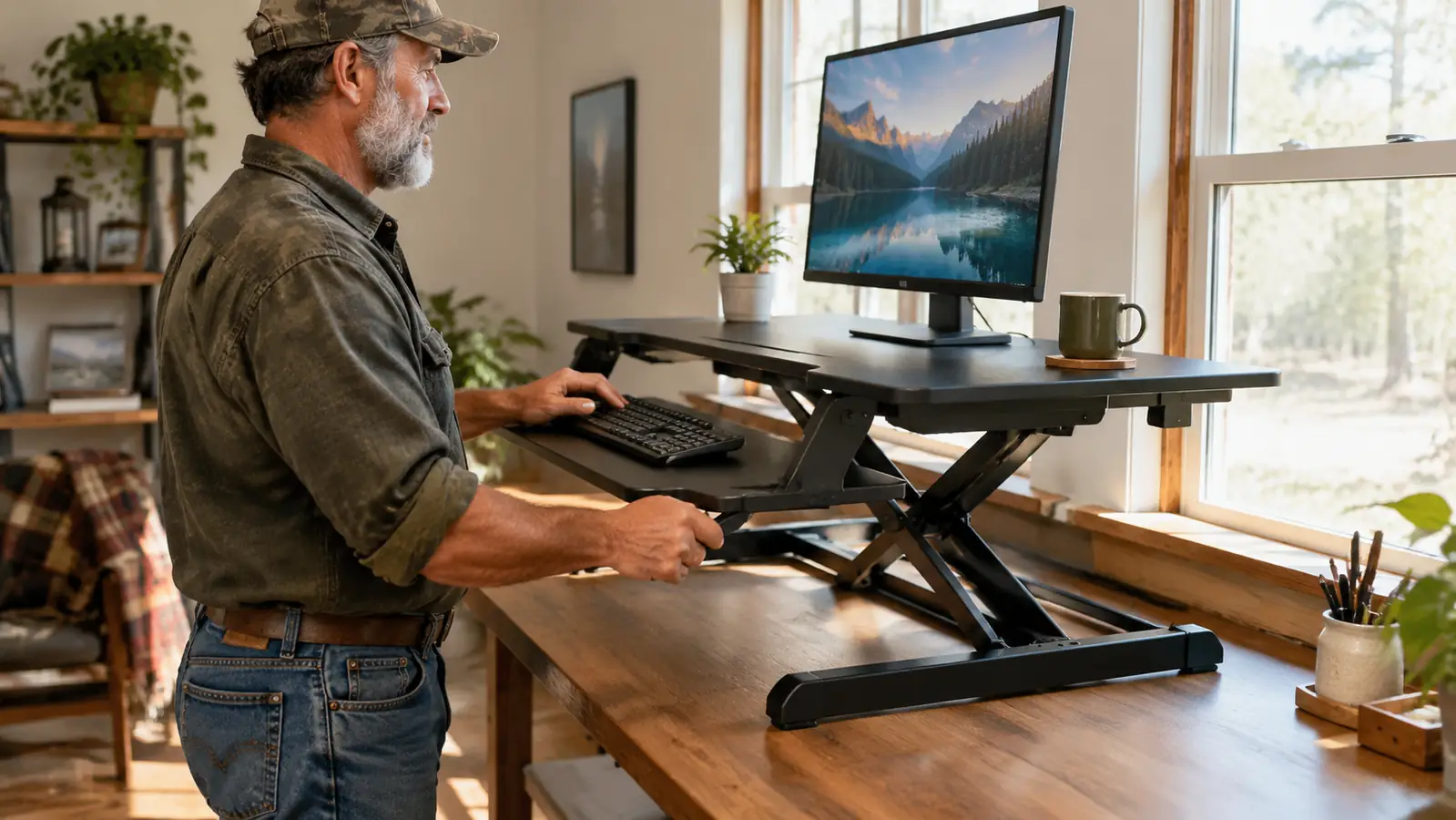
When the box came, it looked more serious than I expected. The VIVO converter is a sturdy platform with a handle and a row of adjustment holes, and my first reaction was that I had bought something closer to gym equipment than office furniture. My second reaction was practical: where would the monitor, keyboard, and the mess of cables all go. Once it was arranged, I was surprised at how little my desktop changed. The monitor sits on the upper riser, the keyboard tray rests below it, and the laptop stand still holds its spot off to the side.
Raising the converter is a motion, not a project. You release the handle, bring the surfaces up slowly, and let the gas spring hold them. I found myself doing it in the middle of a thought instead of waiting for a clean break. What I had not counted on was that the simple act of moving from sitting to standing gave my brain a reset, almost as if I had walked to the kitchen and back, but without losing my place in the document.
By the end of the first month, the afternoon part of my day looked different. I will not claim the desk fixed my back, because a desk does not fix a back, and I do not give medical advice. What I can say is that I used to spend the last two working hours waiting for the day to end. Now I often spend them on my feet, rereading a section, marking up a manual, or just thinking while the afternoon light comes through the window.
The change became clear on an ordinary client call at 4:30. I raised the VIVO converter before I dialed in, stood through the whole forty minute conversation, and realized after I hung up that I had not once looked at the clock or wondered how much time was left. It was not a dramatic transformation. It was the difference between finishing a day and limping to the end of it.
The riser did not make me stand for eight hours. It made standing feel like the obvious move whenever my body asked for it.
If your afternoons go flat around 3pm, this is the converter that changed mine.
I have lived with the VIVO converter on a regular desk in a real home office for months. If that is the same situation you are in, today's Amazon listing will show you the details.
Amazon See the VIVO Converter on Amazon →I want to be straight about the parts that took getting used to. The converter takes up the whole width of my desk, so my desktop feels smaller than it used to. I lower my chair armrests before I raise it, or they bump into the bottom of the platform. And my monitor's power cord was only just long enough to stay tidy when the riser was at full height. None of those are deal breakers, but you should know them before a box shows up.
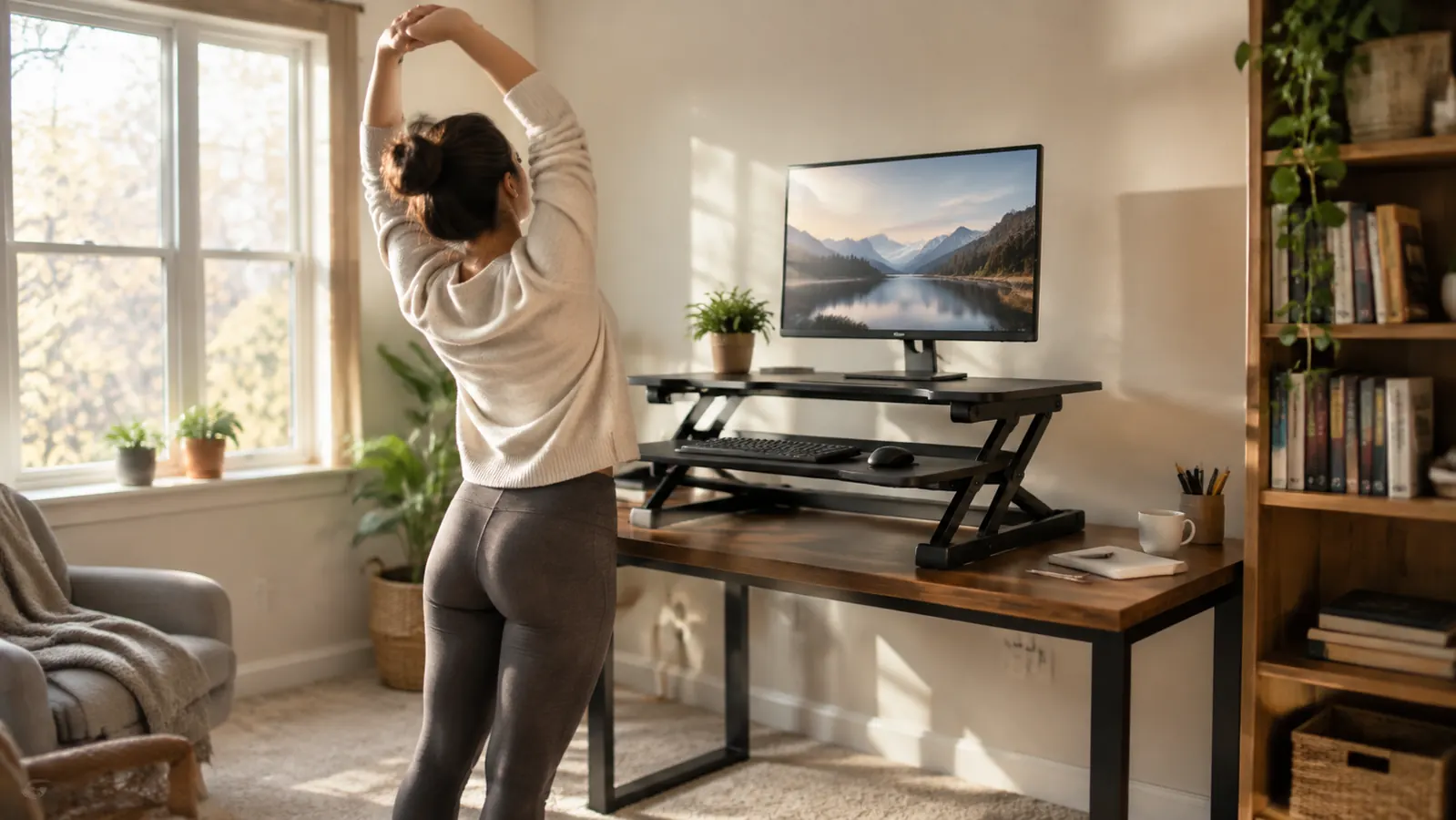
The other thing nobody tells you is that you will not use it perfectly right away. For the first week I would leave the converter down and then remember it at 5pm. It helped when I attached it to an existing habit: I raise it whenever I start an editing pass, return a call, or finish a long chapter. That is what made the difference, not the machinery.
After six months, we have settled into a rhythm. I do not stand for hours at a time. Most days I raise it for ten or fifteen minutes whenever my back or my attention starts to complain, twice in the morning and once or twice in the afternoon. Watching the clock and forcing myself to stand for two hours would have turned a useful tool into a chore.
Would a full height adjustable desk have done the same thing? Probably. But that would mean replacing a desk I still like, and it would have nowhere to live if I changed rooms. The converter can move with me to another desk later, and for now it keeps the furniture I already own. Simpler usually wins in a small room.
The best surprise was how much easier phone calls became. Before, I would sink deeper into the chair as a call dragged on. Now, when a conversation goes long, I stand for the second half of it on purpose. My voice sounds steadier, and my note taking has fewer false starts.
What I'd Tell You If We Were Sitting at My Kitchen Table
If you were sitting at my kitchen table with that tired 3pm feeling, I would say this: do not start by replacing the desk that still works. Start with the simplest way to give yourself one more position. Move your monitor and keyboard up for one phone call a day and notice what happens to your energy. If it helps, keep doing it. And if you buy a riser, measure the depth of your desk first, leave room for your chair armrests, and give yourself two weeks to build the habit before you judge it. That is exactly what I wish someone had told me.
The first step is a standing session, not a whole new desk.
I added a VIVO converter to a perfectly good desk, and months later it is still the first thing I reach for in the afternoon.
Amazon Check the VIVO Converter on Amazon →