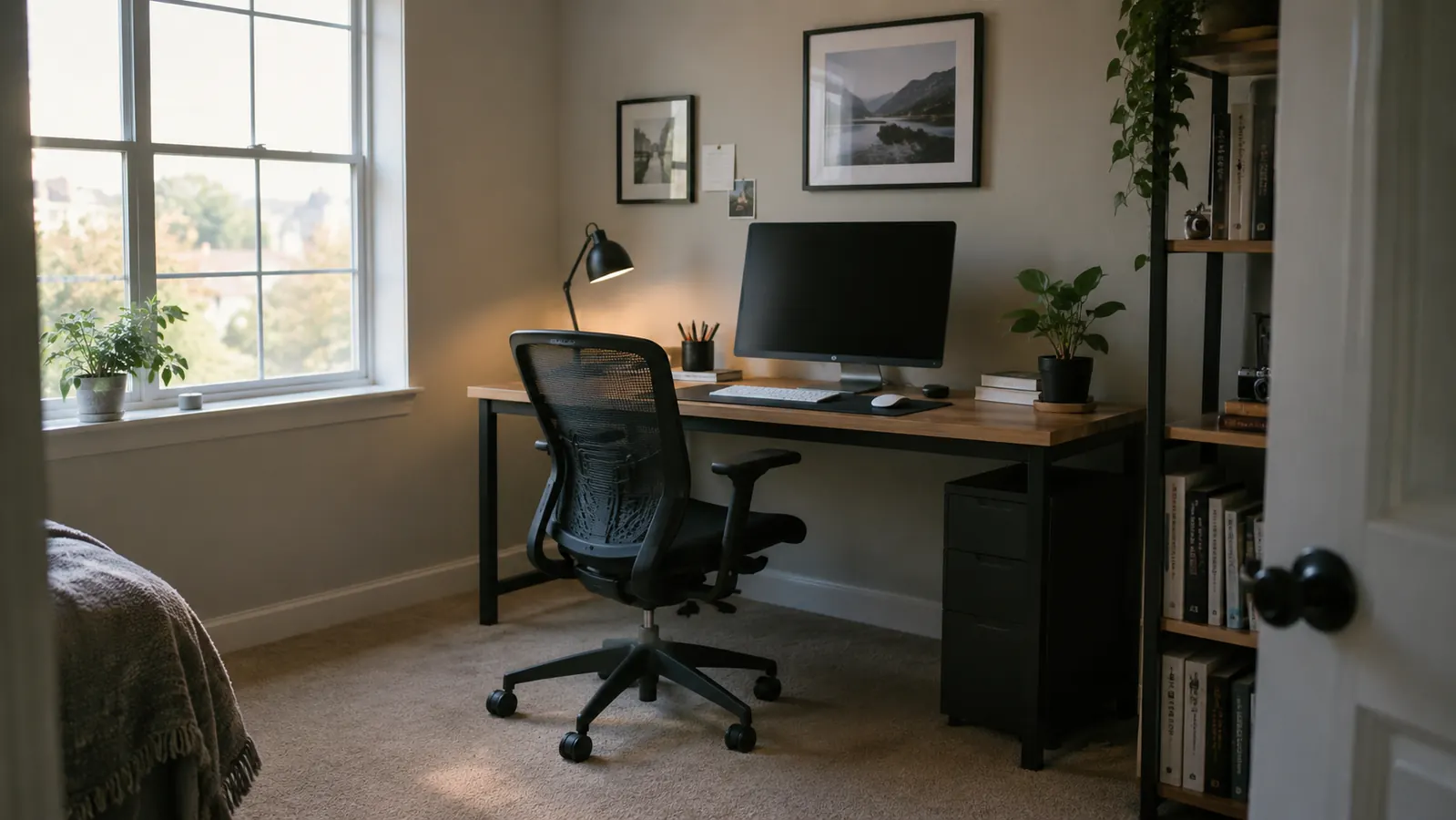
I ordered the GABRYLLY ergonomic office chair in the first week of June, after three mornings in a row of getting up from my desk with that familiar hot pinch in my lower back. I am a 54-year-old freelance technical writer who has worked from a 10 by 11 foot spare bedroom since 2019. The back issue has a date attached to it: a car accident in 2015, so when a chair advertises itself as ergonomic, I treat it as a testable claim, not a comfort word. Six months and roughly nine hundred hours in that seat later, this is the honest version of my experience, including the pieces that annoy me enough to mention first.
The thing nobody tells you about buying an office chair online is that you are not really buying a chair. You are buying a relationship with a piece of foam, a set of gas cylinders and a mesh back that will hold your body in a way you only understand on day forty. The reviews that sold me on the GABRYLLY chair were almost all four and five stars, and I will add mine to that pile. But I also kept a running list of every small disappointment, because that list is the part that matters when you are spending real money and cannot test the thing in a room. The seat is wider than I expected, the back support sits higher than the marketing pictures suggest, and the headrest is not a pillow, it is a curved piece of mesh that only helps if you sit back far enough to use it.
The Quick Verdict
After six months of near-daily use, I would buy the GABRYLLY again, but only with the lumbar pillow it includes; the headrest is the weakest point and the seat does not slide forward for shorter legs.
Amazon Check Today's Price →If you are comparing mesh task chairs with a headrest, this one deserves a closer look.
I lived with this chair through a hot Raleigh summer and a full documentation project. It held up better than I expected, and I want you to see the honest version of that experience before you check the current listing.
Amazon Check Today's Price on Amazon →How I've Used It
Here is the setting: a single desk against the long wall of my spare bedroom, one north-facing window on my left, a main monitor plus a laptop on a stand, and a wired keyboard that keeps me close enough to the screen that I lean forward while I draft. I sit back when I read long documents or talk on a video call. So the chair had to work for two different postures, and that was the first thing I tested.
I put it together on a Tuesday afternoon. The whole build took about 25 minutes, and most of that was spent on the backrest bolts rather than the casters or the gas cylinder. The printed instructions use diagrams, not photos, and one line warns you not to apply extra force by feel. I tightened a little past flush, then backed the bolts off and retightened evenly, which is the procedure that probably kept the mounting holes aligned. The hardest part for me was tilting the backrest into place without the headrest banging the wall. I also discovered that the headrest angle is set with a single screw on the top of the backrest, and I spent a minute getting it low enough that the curve landed below the back of my skull when I sat upright. That adjustment did not help the headrest as a typing support, but it made the chair more comfortable for leaning back during calls.
For the first week I did not like the seat. The cushion is firm, which is the correct choice for long sitting, but it feels like a step down if you are used to a soft dining chair. On day eight I almost returned the whole thing. I am glad I did not, because somewhere around the two-week mark the foam settled and the back mesh relaxed. I kept notes, so I can tell you it happened between July 2 and July 16. I was in the middle of rewriting a forty-page installation manual for an industrial client, which meant unusually long sitting blocks, and that project is what gave the chair its real test. By the end of that stretch I was getting through a full morning without the lower back grumble, and I stopped thinking about the chair every time I moved.
What Six Months of Daily Use Taught Me
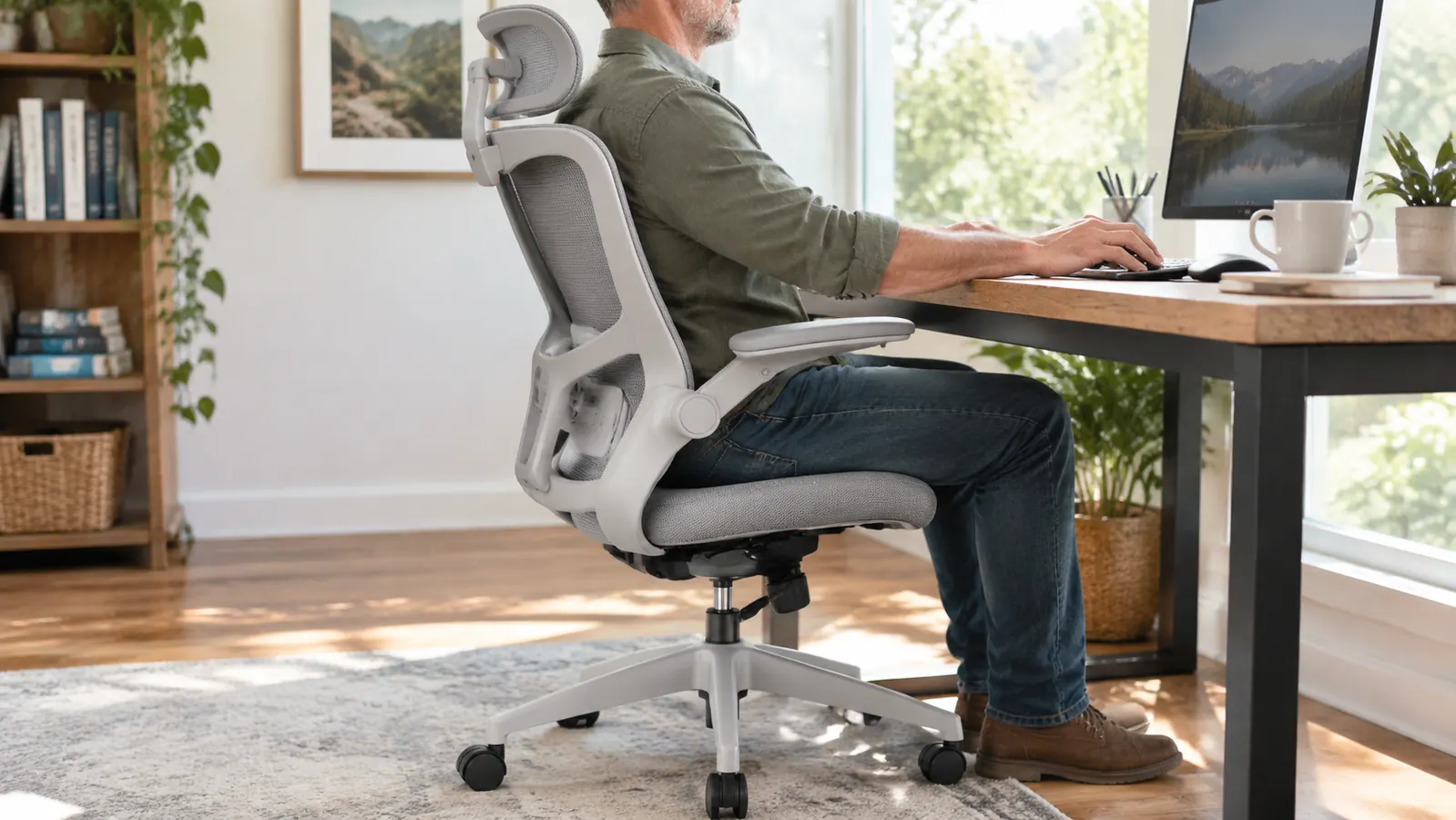
The first lesson is about seat height. The GABRYLLY has a taller range than the chair it replaced, and the difference has been the single most important adjustment I made. I set the seat low enough that my feet are flat on the beige carpet and my knees sit just below my hips. That takes pressure off the back in a way that I can feel within a few minutes. I put a small reminder on my monitor that says low because I still tend to drift the seat back up during a busy week. I found the right height on June 18, after a failed first attempt where I left the seat one inch too high and ended the day with sore hamstrings.
My back history is a 2015 car accident, and it makes me unusually sensitive to a seat that lets my pelvis tilt backward. The GABRYLLY back has a lumbar curve that sits a little higher than I expected, closer to my mid-back than to my waist. At first I thought the curve was in the wrong place. Then I positioned the included lumbar pillow so that it filled the space between the chair and my spine, and the two pieces worked together in a way I had not found in a mesh chair. I can sit for a full ninety-minute writing block now and not stand up in pain, which was not true of the last chair I owned. I also shifted the chair's back angle one notch to 110 degrees while writing, and the curve pressed into the right spot.
I am careful not to claim this works for everyone, because chair fit is individual. What I can report is objective enough: by the fourth week I stopped reaching for the kitchen chair after dinner when I wanted to answer email. The GABRYLLY became my default seat outside my writing blocks. That is the strongest compliment I know how to give an office chair.
The Annoying Bits Nobody Photographs
Now the list I promised you. The headrest is the weakest part of the chair. It is a curved piece of mesh on a frame that tilts, and it only touches my upper back when I lean all the way back. If you want a padded headrest that cradles your neck while you type, this one will not do that. I tilted it as far forward as it allows and it works only when I am reading without a keyboard in front of me. During typing sessions the headrest simply does not come into play. During a call on September 12 I tried resting the back of my head against it while reading a long quote on screen; it worked for about six minutes before my neck complained.
The flip-up arms are a feature I use every evening, because when I stand up I lift the arms and slide the chair closer to the desk, making the room feel a bit less cluttered at the end of the day. The release tab under each arm is stiff. On day one I thought I would crack the plastic. I have learned to grip the underside with my thumb and the top with my fingers and pull with a firm, even motion. It has not broken in six months, but it has not loosened, so it is one of those things I do not flip as often as I would if it moved more easily.
The seat is wide, and wide works for me because I am tall. But if you are shorter, the front edge of the cushion can press into the back of your thighs. This chair does not have a sliding seat pan, and that omission is the biggest design gap. A friend who is 5 foot 2 spent an afternoon in the chair, and even at its lowest seat height with a footrest under the desk, the edge was bothering her after about forty minutes. I am 5 foot 7, and the same edge does not bother me after a seven-hour day. That difference is exactly why you should not buy the same chair as someone with the same width habits but a different leg length. I wish the chair let me adjust the seat depth independently; on a chair without that feature, the only substitute is a footrest or a rolled towel behind the knees, and neither is the same.
One more small complaint: the armrests have a little side-to-side play. They do not jiggle during normal use, but if I rock back in the chair and push off an armrest to stand up, the whole arm shifts about a quarter of an inch. It has never failed, it is just one of those small reminders that this chair does not feel as rock solid as a heavier executive model.
The Good Parts After the Break-In
Once the cushion and mesh relaxed, the chair became comfortable for the work I actually do. A usual day is a ninety-minute writing block before lunch, a video call in the early afternoon, then two more hours of editing. On a normal day I am in the chair by 9:15 and out of it by 4:30 with a real lunch break. The GABRYLLY handles that load without the afternoon ache that used to start around 2:00.
One test that stands out happened the last Saturday in July. I had to proof a ninety-page manual against a client's redline, which meant sitting at the desk from 8:15 to 5:45 with only a true lunch break and two short walks. On most chairs I would have been shifting by the middle of the afternoon. In the GABRYLLY I made two small adjustments, one to the tilt lock and one to the lumbar pillow position, and finished the day with only normal tiredness. That is the kind of evidence that matters more to me than a star rating.
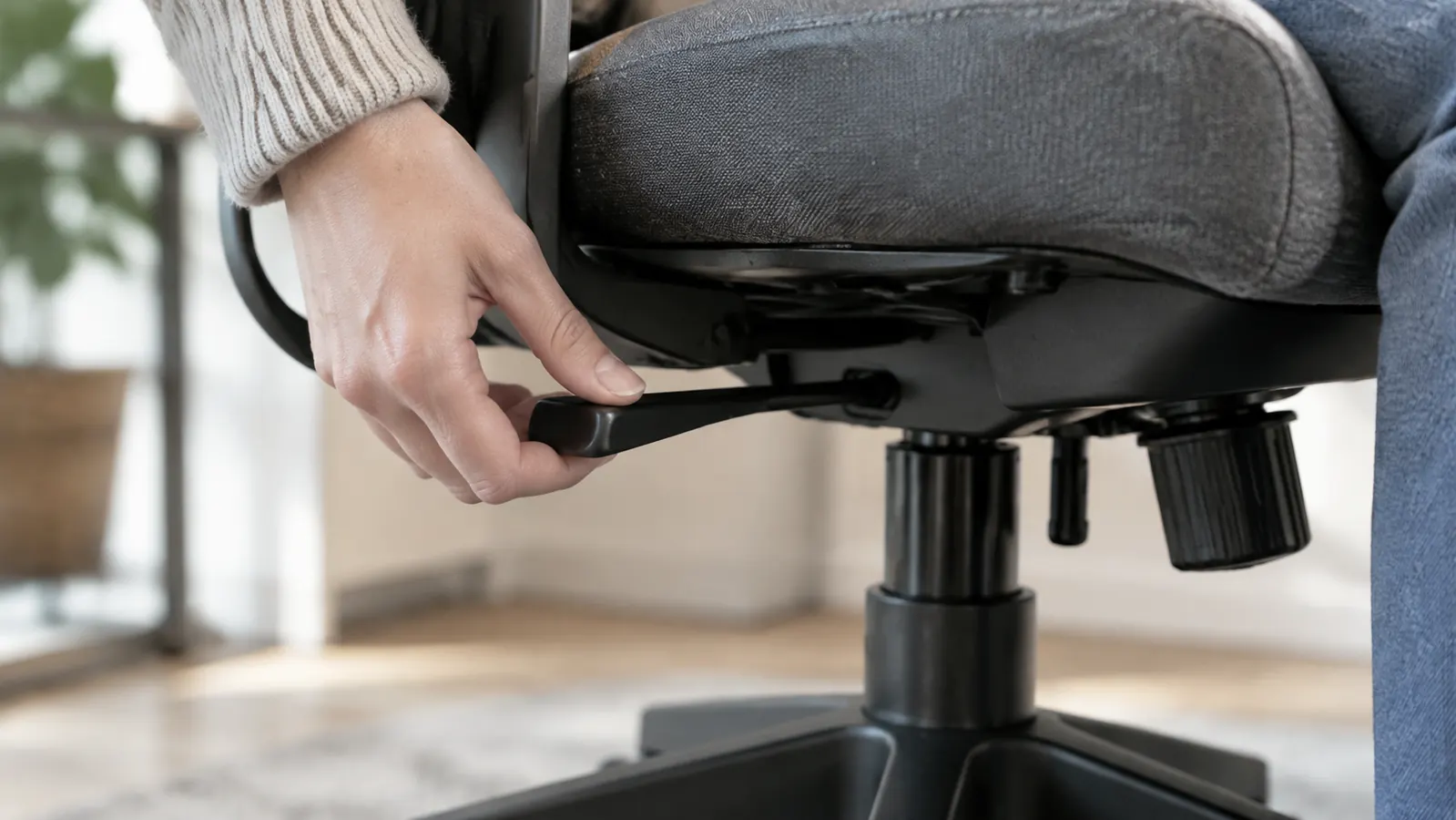
The tilt lock is a feature I did not expect to use daily. The lever under the seat pinches the back at a few angles. I keep mine set at roughly 100 degrees, slightly reclined, and I only unlock it when I want to lean back to read a long document on-screen. The tension knob is on the underside and reachable even while I am sitting. It clicks into detents rather than turning silently, which took me a while to learn, but it means the setting does not drift as the day goes on.
The breathable mesh earns its keep in a room without air conditioning. Raleigh summers are humid, and my previous chair had bonded leather that left my back sticky by noon. The GABRYLLY back lets air pass, and I was still comfortable in late August during an editing sprint. This matters more than you think if you are in a room where the sun hits the window for part of the afternoon.
The Hardware After Six Months
I checked the moving parts at the six-month mark because that is where cheap chairs show themselves. The gas cylinder still holds position when I set the seat height, and it does not leak down overnight. I measure it by placing a pencil on the base and marking the edge of the seat each night; the mark stays within the same half-inch for a full week. The tilt lock clicks into each detent with the same distinct feel, and the flip-up arms have not become looser at the hinge.
The mesh back has relaxed and also stretched a small amount. It no longer snaps when I lean into it, but it has not sagged into a permanent slouch. There is one cosmetic seam imperfection on the right side near the top of the back, visible only if I get close and look for it. For a chair used daily for six months, I consider that acceptable wear.
What I Liked
- Tilt lock has discrete detents and never drifts during a long writing block.
- Included lumbar pillow works with the built-in curve after the mesh settles.
- Flip-up arms lift clear, which makes sliding the chair under the desk easy.
- Breathable mesh keeps a humid room tolerable through an entire North Carolina summer.
- Six months in, the gas cylinder still holds its height overnight.
Where It Falls Short
- Headrest is too low to support your neck while sitting upright and typing.
- Seat pan does not slide forward, so shorter legs can feel pressure on the underside of the thigh.
- Armrests have noticeable side-to-side play when you push off to stand.
- No independent armrest height adjustment; the whole assembly moves only between locked positions.
On June 18 I lowered the seat and the afternoon ache stopped. On July 16, after the break-in, the GABRYLLY became the chair I stayed in after hours.
Who This Is For
For a remote worker who spends long, uninterrupted blocks at a desk, especially if a past back injury makes you pay attention to how your hips sit, this chair is worth considering. It also worked well for me because I am tall enough for the fixed seat depth and because I wanted a headrest for reading, not typing. If you are in that group and you have a week to let the foam settle, the GABRYLLY is likely to do what you need.
Who Should Skip It
If you are shorter than about 5 foot 3 and cannot try the seat depth first, this is not a safe blind buy. The missing sliding seat pan is the reason. If you want a cushioned headrest that supports your neck while you are upright, this chair will not provide it. And if you are hoping a chair will fix your posture without your participation, no chair does that, including this one. You still have to set the height, position the lumbar pillow, and stand up on a regular schedule.
My honest bottom line: try the GABRYLLY for two weeks before you decide, and give the foam time to settle.
You have read about the headrest, the seat pan, and the stiff armrest release. None of those stopped me from using this chair every working day for six months. Go see the current listing and decide if those tradeoffs fit the way you sit.
Amazon Check Today's Price on Amazon →