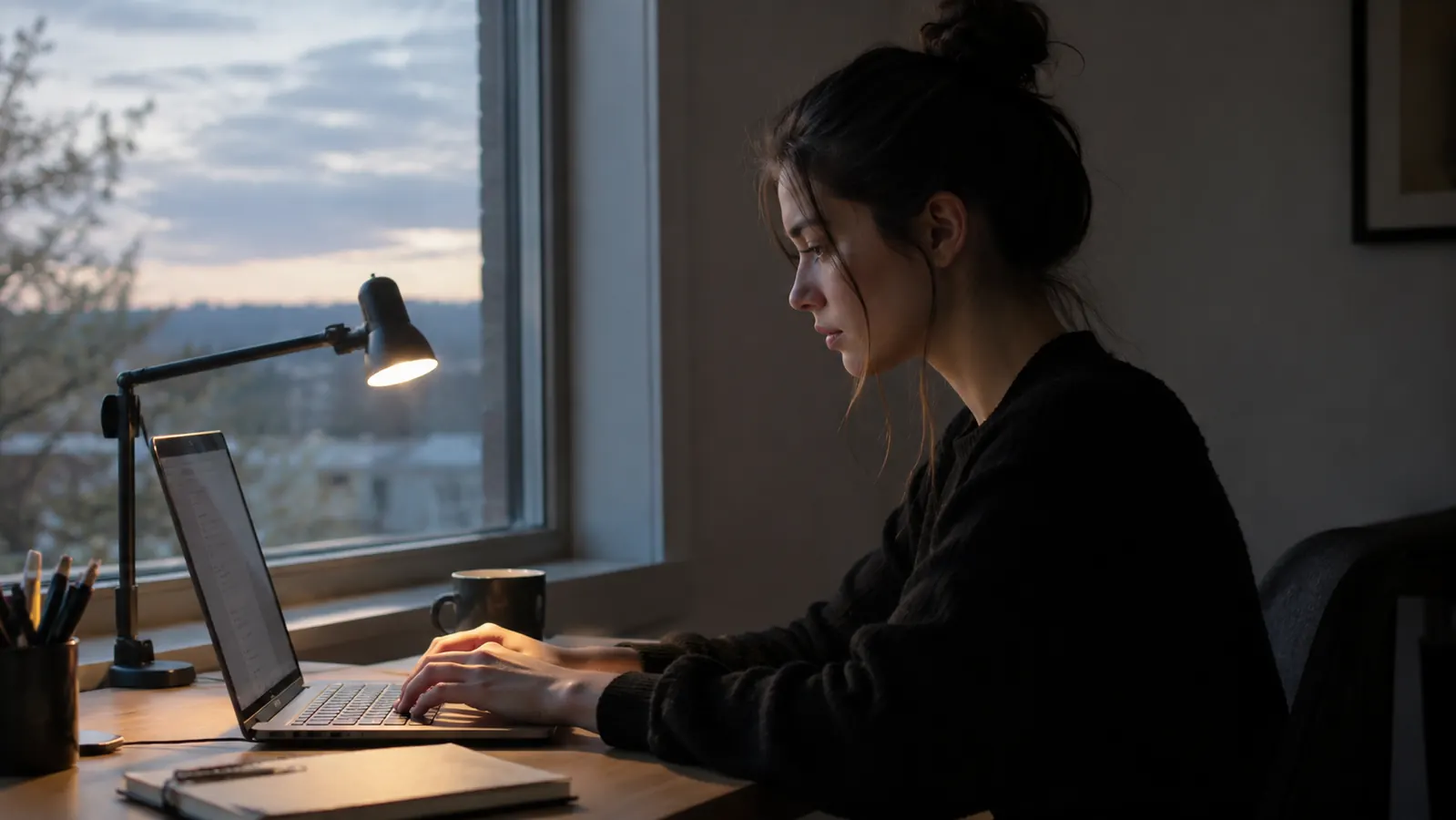
I spent five years working at the same desk in the same spare bedroom, and for most of that time I blamed my eyes. I am Ellen Hartley, a freelance technical writer in Raleigh, and my office is the converted second bedroom at the back of a 1990s ranch house. There is one north-facing window on the left of my desk, which gives nice light for about an hour after sunrise and very little after lunch. My main monitor sat right in that weak glare zone, and by two o'clock I would lean toward the screen like it was a campfire. The overhead light I dislike only made things worse, because it bounced off the screen instead of lighting my keyboard.
A colleague who shoots product photography mentioned the Lepro Small Desk Lamp with Clamp. She has one in her home office for the same reason I needed it: the room light was aimed at the ceiling, not at her hands. I ordered one out of mild hope more than conviction, because I had tried monitor hoods, changing the screen brightness, and moving my chair six inches to the left. None of those fixed the washout.
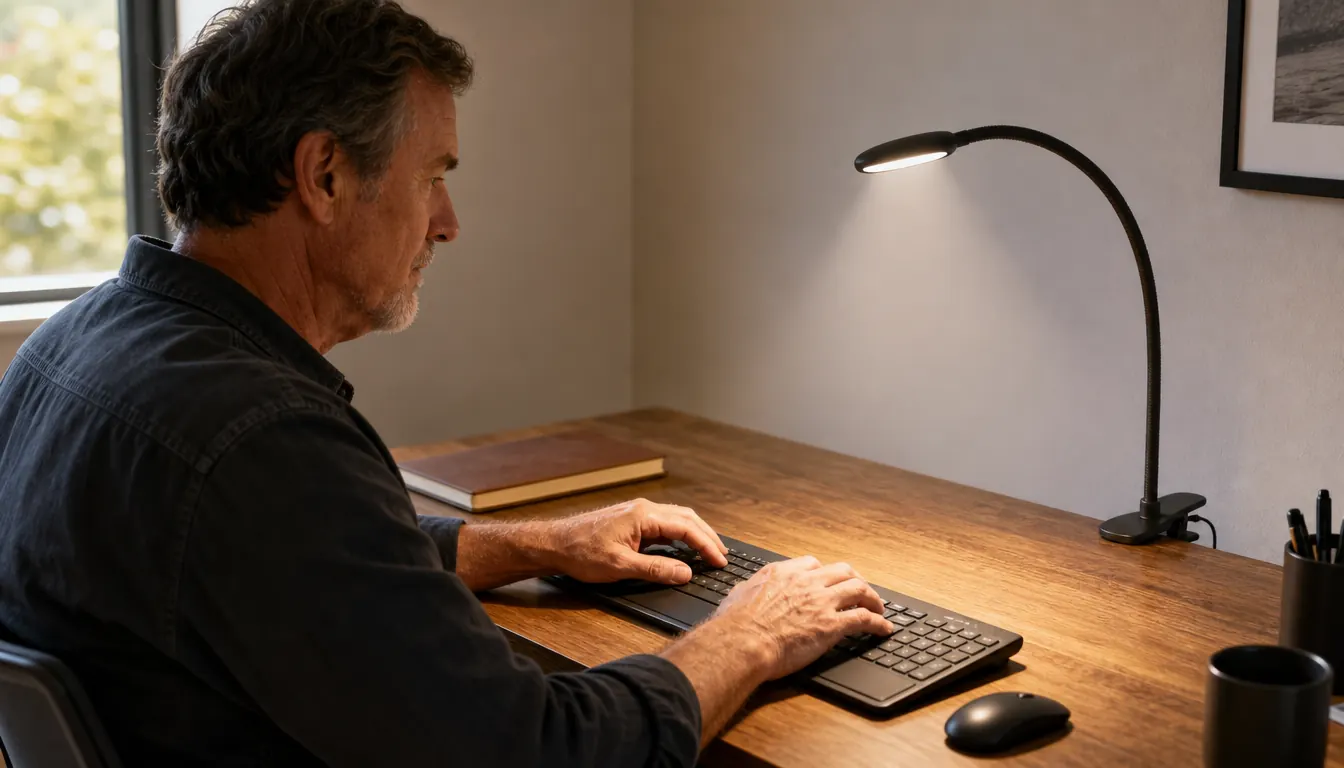
The lamp does exactly one thing, and it does it well: it puts a patch of even light on the keyboard without shining into my eyes or onto the monitor. It clamps to the back edge of the desk, so it does not take up space where my papers go. The arm is long enough to angle forward, and the head is small enough to stay out of the way. That sounds simple, but it was the first light I owned that I did not have to fight.
My first test was unscientific. I turned off the overhead, clicked the lamp on, and wrote for an hour without moving the lamp even once. The keyboard was clearly lit, and the monitor no longer had that hazy stripe down the left side where the window glare used to sit. I did not feel like I was squinting, because I was not squinting. When my timer went off, I had written more pages than usual, which had nothing to do with the lamp and everything to do with not stopping to adjust the blinds.
The part I did not expect was how much it changed my posture. When I could see the keys, I stopped hunching over the desk. My lower back, which has been finicky since a car accident in 2015, complained far less during long writing blocks. I am not a physiotherapist, so I am not about to tell you a lamp cures back pain. I can only tell you that leaning toward a screen all afternoon puts strain on places that do not need strain, and this lamp removed the reason I leaned.
The day I stopped reaching for the overhead light in the afternoon was the day that room started working for me.
If Your Monitor Looks Washed Out by Noon, It Is Not Your Eyes
A clamp lamp that sits behind the work instead of on it, points light only where you need it, and stays where you bend it. This is the first change I would make in any desk setup that relies on overhead light. See today's price on Amazon before you rearrange your whole room.
Amazon Check Today's Price on Amazon →What surprised me is how little thought the lamp asks for. It sits in the same spot at the back edge of my desk, and I turn it on when I sit down and off when I leave. The switch is on the cord, which means I can find it without looking. There are no modes to scroll through, no phone app to open, and no reason to touch it again during the day. I have forgotten it is there until my hand reaches for the switch.
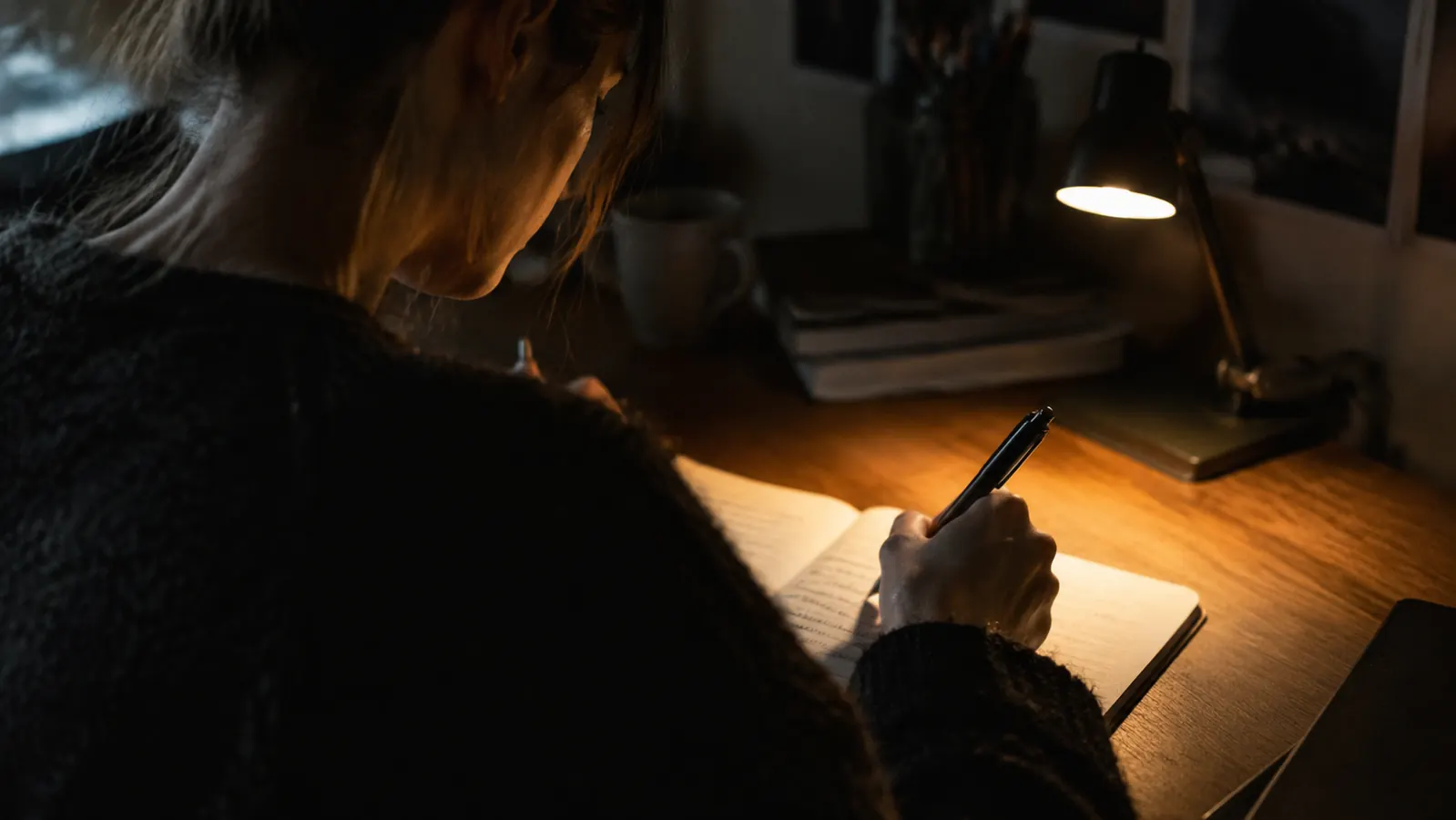
There is a learning curve, and it is short. For the first week, I kept the lamp on the left edge near the window, where it did very little for the keyboard. The right spot turned out to be the back edge, just to the right of the monitor, with the arm angled down over my hands. Moving it took forty seconds and turned the lamp from useless to useful. The same thing will happen to you, so do not judge it from the first position you try.
The tradeoffs are small. The cord is not extra long, so the lamp needs to clamp near an outlet unless you use a power strip. The clamp also needs a straight desk edge; a rounded tabletop would be a problem. Neither was an issue for me, but they are worth knowing before you buy.
On video calls, the lamp does double duty. I angle it slightly toward my face instead of down at the keyboard, and it gives enough even light that I no longer look like a person sitting in a cave. A client asked recently whether I had changed cameras or bought a ring light. I had done neither. I had just moved a five-watt LED lamp six inches.
I have not replaced the overhead light. Most days I only use the Lepro, and the ceiling fixture stays off until I need to find something in the closet or clean under the desk. That is the strongest thing I can say about any lamp: it made the room's original light unnecessary for the job I actually do in here.
What I'd Tell You If We Were Sitting at My Kitchen Table
If you have been fighting a glare that shows up around the same time every afternoon, try the cheapest fix before you redesign the whole room. Clamp a small lamp to the back of the desk, aim it at the keyboard, and turn off the overhead light for a few hours. It should not take a lighting consultant to figure out where your hands should be. The window is not going anywhere, and neither is your screen. What can change is where the light comes from. I spent years blaming daylight and my aging eyes, when the actual problem was that I was lighting the whole room and ignoring the two square feet where I work.
The Lamp I Would Buy Again for the Same Desk
If you want less glare and a keyboard you can actually see, the Lepro Small Desk Lamp with Clamp is still on my desk months later. It is not a big production, and that is exactly the point.
Amazon Check Today's Price on Amazon →