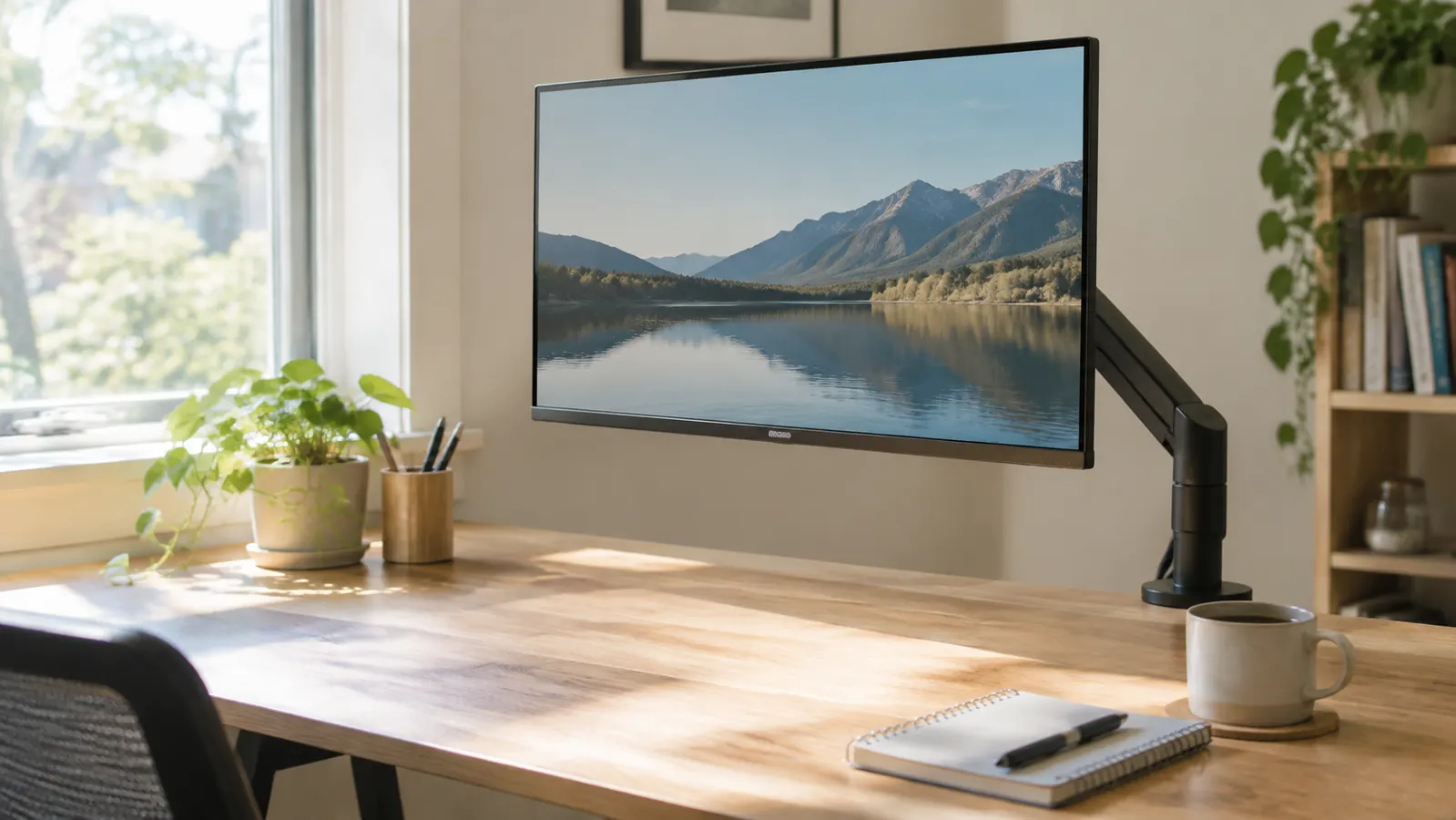
For three years, my monitor lived on the little stand it shipped with, and for three years I explained away the knot in my right shoulder. I told myself it came from hunching over a keyboard or from the way I cradle the phone on calls. Then I finally moved the screen onto a VIVO monitor arm, and most days the knot simply does not show up. I did not expect that from a piece of desk hardware. I should have expected it years earlier.
I am Ellen Hartley, 54, freelance technical writer, and I work in one converted spare bedroom in a 1990s ranch house in Raleigh. It is a small room. My desk sits against the long wall, one monitor in front of me and a laptop on a stand to the left. In 2019, when I set up the room, the monitor stand went on the desk and I called it done. The top of the screen landed a few inches below my natural eye line, close enough that I did not notice. Across a six-hour writing block, I leaned in without thinking. The screen should sit at eye level; mine sat closer to my chin.
The clutter was the first thing other people saw. Fifteen inches of desk in front of the monitor had to stay empty, so the notes, coffee, and reading glasses all got pushed to the edges. Cables trailed along the back. Everything worked, and nothing felt good.
After a particularly long January where my lower back flared from sitting too still, I started looking at desk setups the way I would look at a spec sheet. I measured the desk, checked the clamp depth, read the instructions before I bought. VIVO kept appearing in user photos on ordinary desks, not glossy studio shots. That mattered. I did not want an arm that needed a beautiful desk or a camera-ready room. I wanted one that would clamp onto the edge I already had and get out of the way.
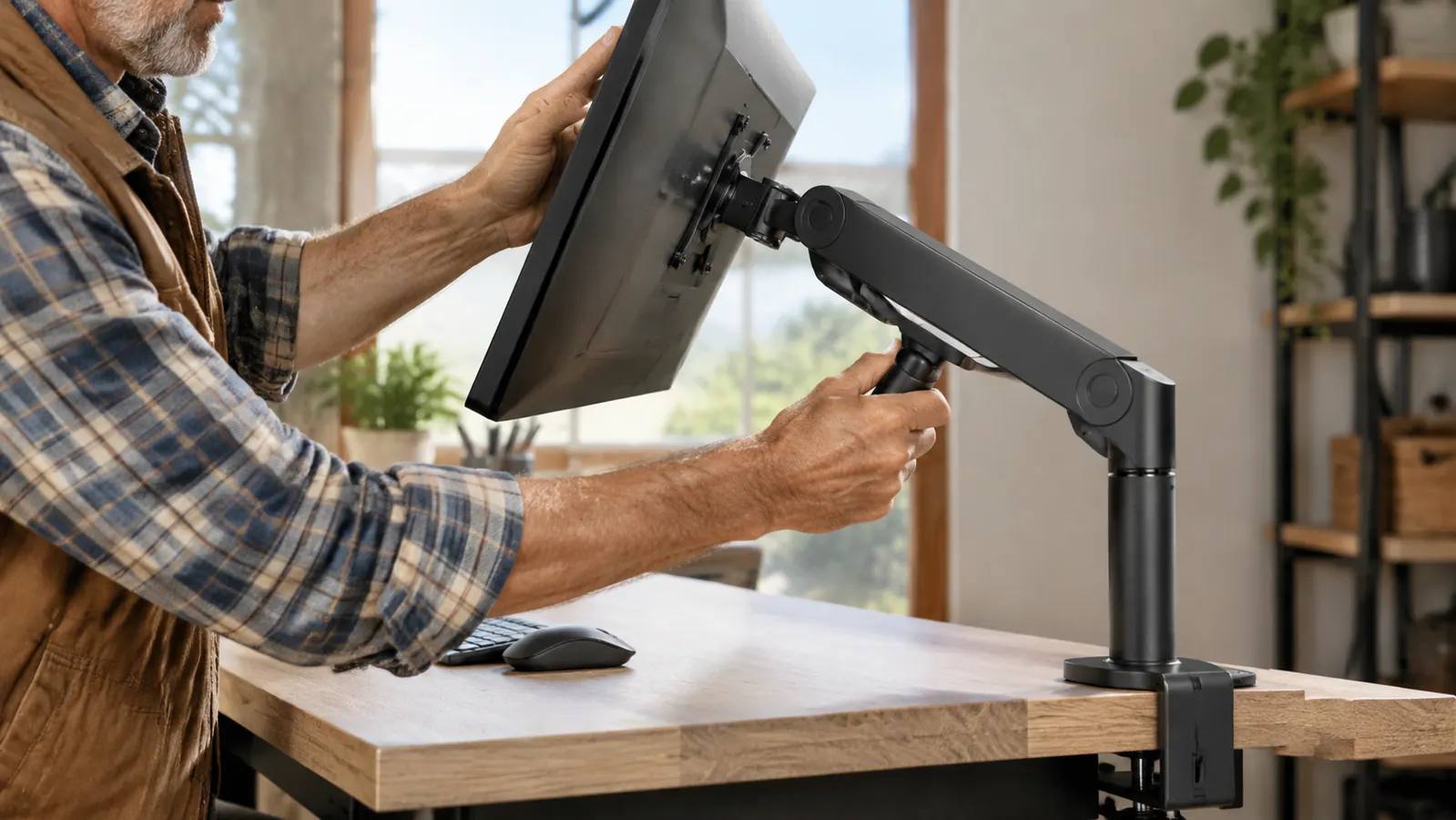
The install took about twenty minutes. I slid the C-clamp over the rear edge of the desk, tightened it with the included hex key, and attached the monitor plate. No drilling, no extra parts. The screen now floats an inch or two above the desk, and the space underneath is clear. I can slide a notebook under it. That sounds small until you work at a desk for eight hours. It is not small.
Once the screen sat at eye level, I stopped leaning into my work without thinking about it.
Put your monitor where your neck wants it
The VIVO mount gave me back a foot of desk space and put the screen at the right height. If your desk edge is clear, this is the upgrade to make first.
Amazon Check Today's Price on Amazon →Once the monitor was on the arm, I understood what the desk had been doing to me. With the old stand, the back of the desk had to stay clear, so I worked with my chair pulled close and my forearms resting on the edge. The arm let me push the monitor back several inches and tilt it up. I set it so the top of the screen sits just below eye level when I sit up straight. My shoulders stay down for most of the day now, and the numbness in my right hand, which I had blamed on the mouse, has faded.
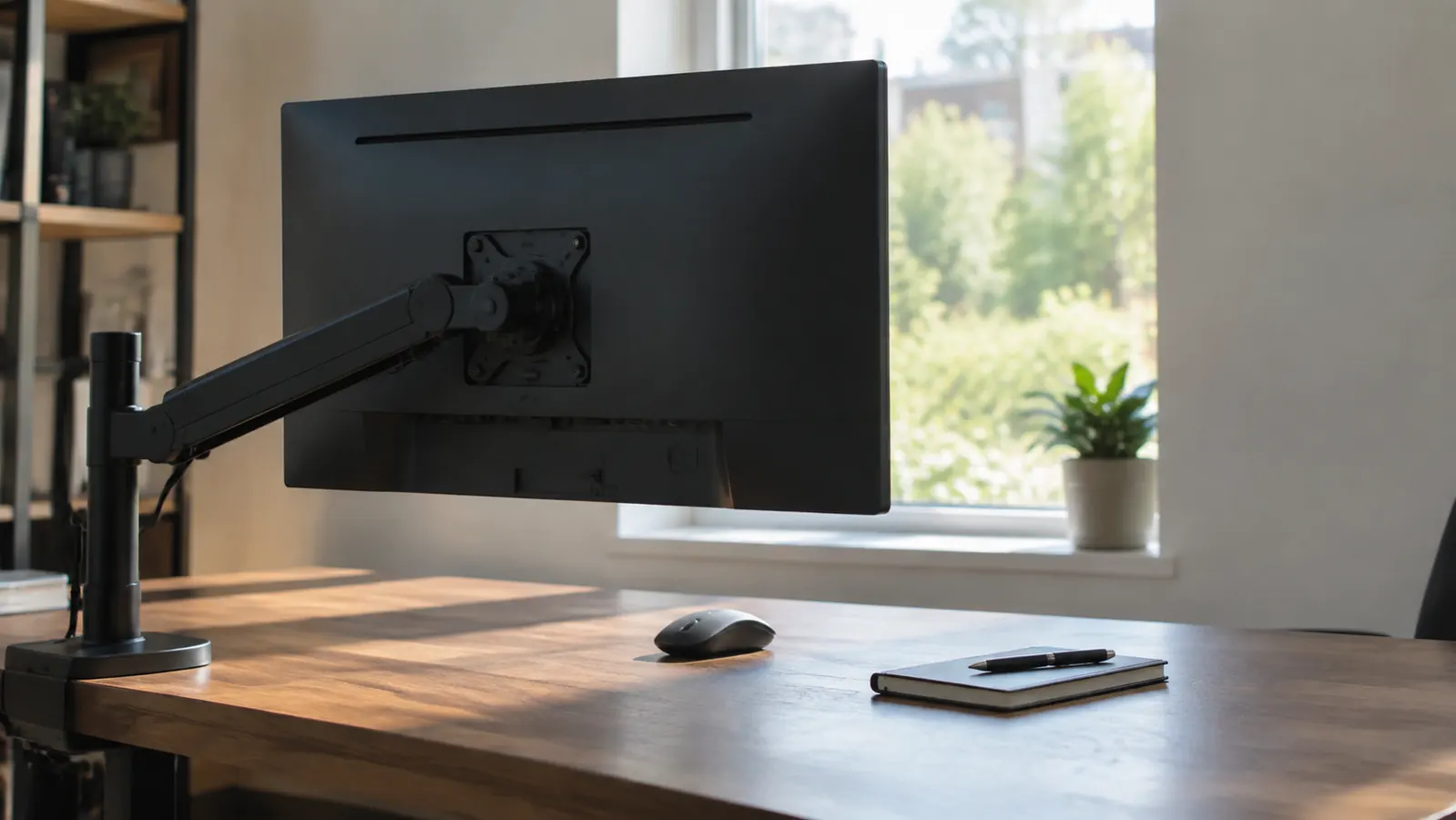
The floor space is the part I did not anticipate. The old monitor stand occupied a permanent square on the desk, and the cables bunched behind it. On the arm, the mount runs along the underside of the desk, and the cord clips on the arm hold the HDMI and power cable against the underside. I can wipe the whole desk with one pass of a cloth. That was never possible before.
Is it perfect? No. The C-clamp takes up about three inches of desk edge. If your desk has a thick lip or a drawer underneath the back edge, you will need to measure before you buy. The grommet mount option in the box covers that scenario, but it requires a hole in the desk, which I did not want to drill. Also, the arm is not one of those designer pieces that folds into the wall. It is a functional mount that looks like what it is. I prefer that.
Six months later, I have not once considered putting the old stand back. The extra desk space means my notebook rests beside the keyboard instead of on my lap. The screen angle changes with the light from my one north-facing window. When I have a call, I push the monitor aside and set up a laptop for the screen share without moving the main screen to the floor.
The measure of this for me is not the way the desk looks in a photo. It is the end of a writing day, when I stand up and my neck does not crack in that familiar way. I still have a lower back that complains, and I still get up and stretch every hour. But the part of the setup that sat in front of my face, day after day, is finally where it should be. That is worth more than any amount of desk real estate.
What I'd Tell You If We Were Sitting at My Kitchen Table
I would not tell you to buy this specific arm because I love the brand. I would tell you to measure first. The desk edge needs to be clear, and the back of your monitor needs to be within the arm's reach. Then I would tell you that the upgrade is about your head position, not your desk. Put the screen where you look at it without tilting your chin down or leaning in. If a mount makes that possible, the rest is details. If it does not, no mount will help. I would also tell you that the VIVO arm has been reliable for me for six months. It still holds the screen exactly where I set it. Nothing has loosened, sagged, or stripped. That kind of quiet dependability is what I need from office furniture.
Measure your desk edge first, then let the mount do its job
If your screen sits too low and you have a clear desk edge, the VIVO mount is the same straightforward fix it was for me. It is not flashy. It simply holds the monitor where you need it, day after day.
Amazon Check Today's Price on Amazon →